
Ages 8 to 10
The Balance by Choice method
Five steps, in the same order every time, whatever your kid's age.
Limits matter, and they work. What makes them easier to hold is a kid who understands why they exist and wants the same thing you do. Every workbook in this catalog runs the same five steps, and so does the parent guide, because the skill they build is the same one at every age.
You can't manage a habit you can't see.
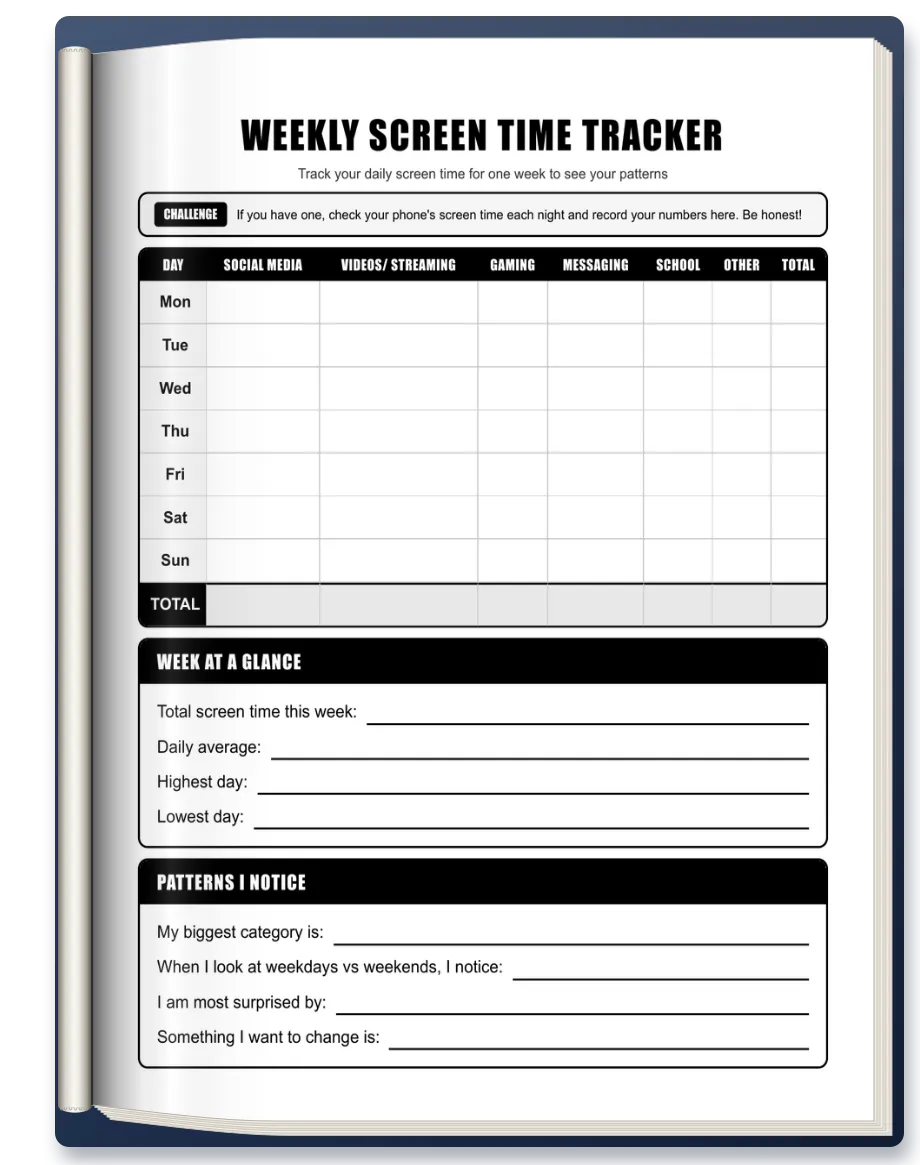
Everything starts with the kid tracking their own patterns instead of you reporting them. The first time a kid adds up their own Saturday, the number does more work than any lecture would.
In the workbookA day of their own screen time, written down by them.
Not "screens are bad."
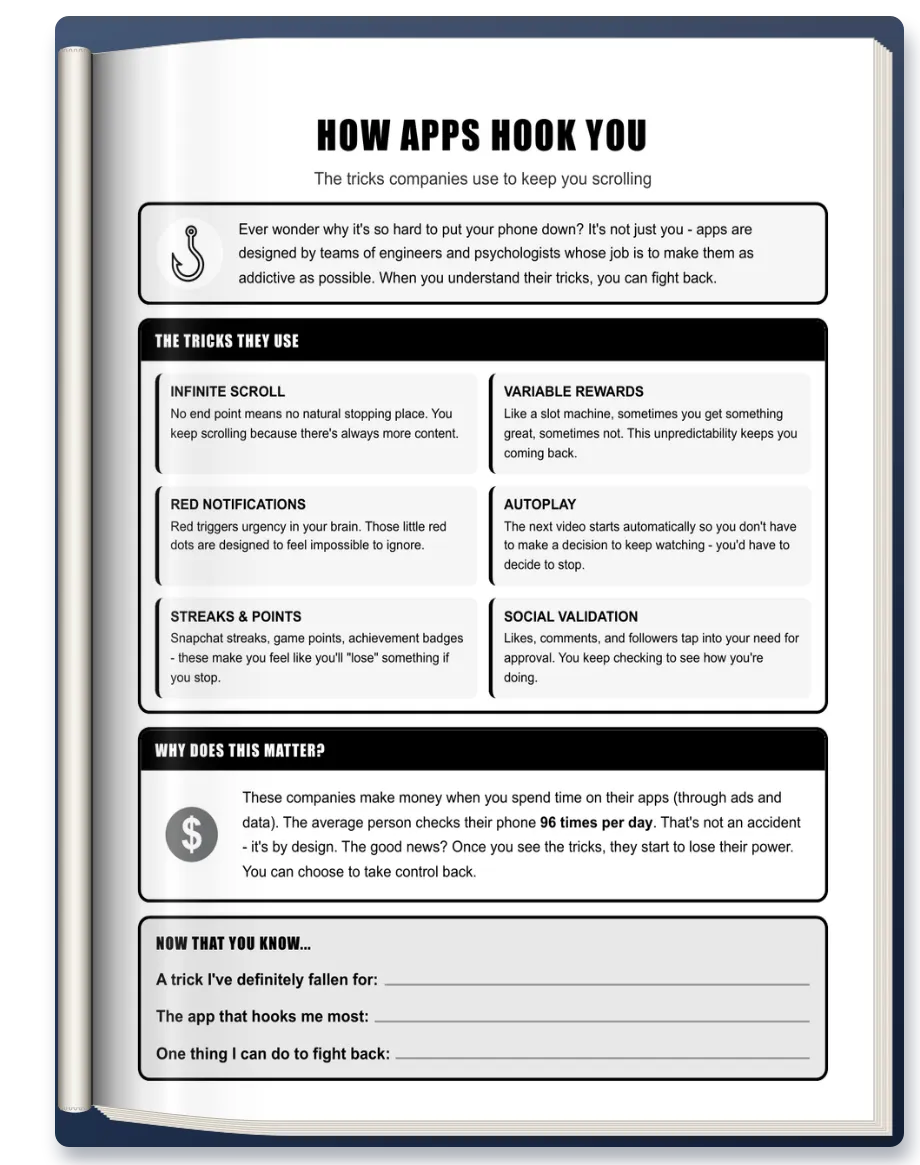
What actually happens to your body, your sleep, and your mood — in a language your kid can connect with. This is also where kids learn how apps are designed to hold attention. Once they can see the hook, they stop taking it personally when they get caught by it.
In the workbookHow infinite scroll works, and why stopping feels hard.
The kid writes the limits. Yes, really.
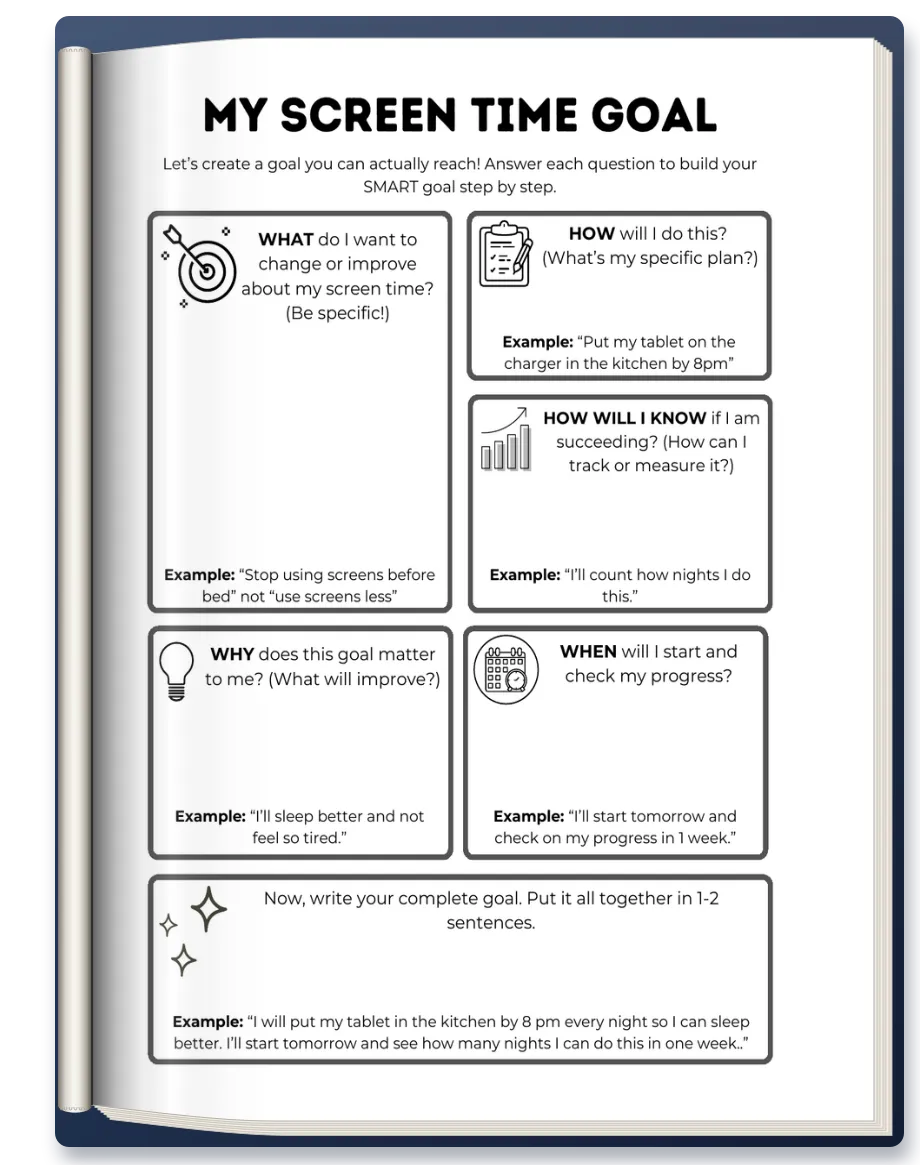
Kids have much more buy-in when they have a hand in creating the rules. They routinely write stricter limits than their parents would have, and they argue for them afterward, because those rules are theirs.
In the workbookA written set of rules, in their handwriting, with their reasons.
Small reps, while you are still around to help.
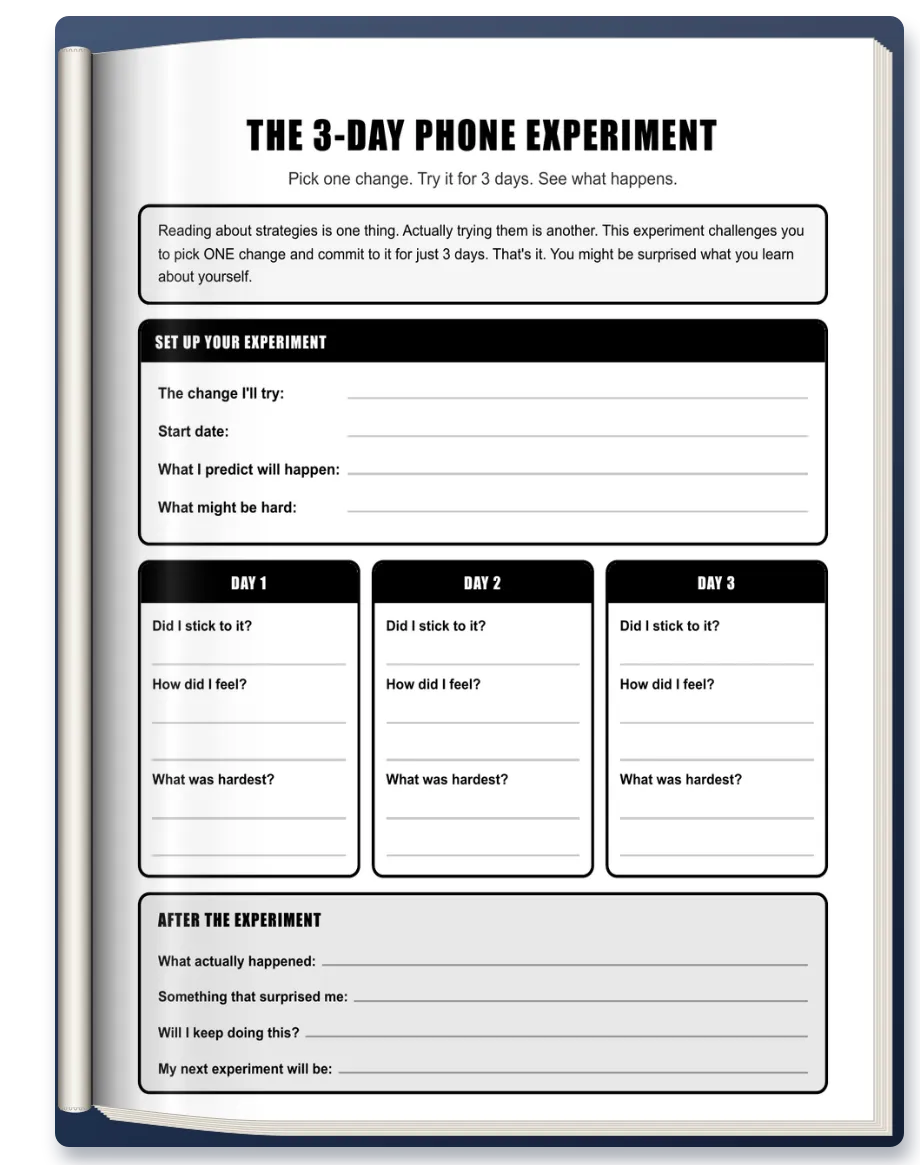
Not a single dramatic overhaul that collapses in a week. One change at a time, tried for a few days, kept or adjusted. Low stakes on purpose — the point is to build the skill in conditions where failing costs nothing.
In the workbookOne rule, one week, then an honest look at how it went.
A bad week isn't failure, and neither is changing the plan.
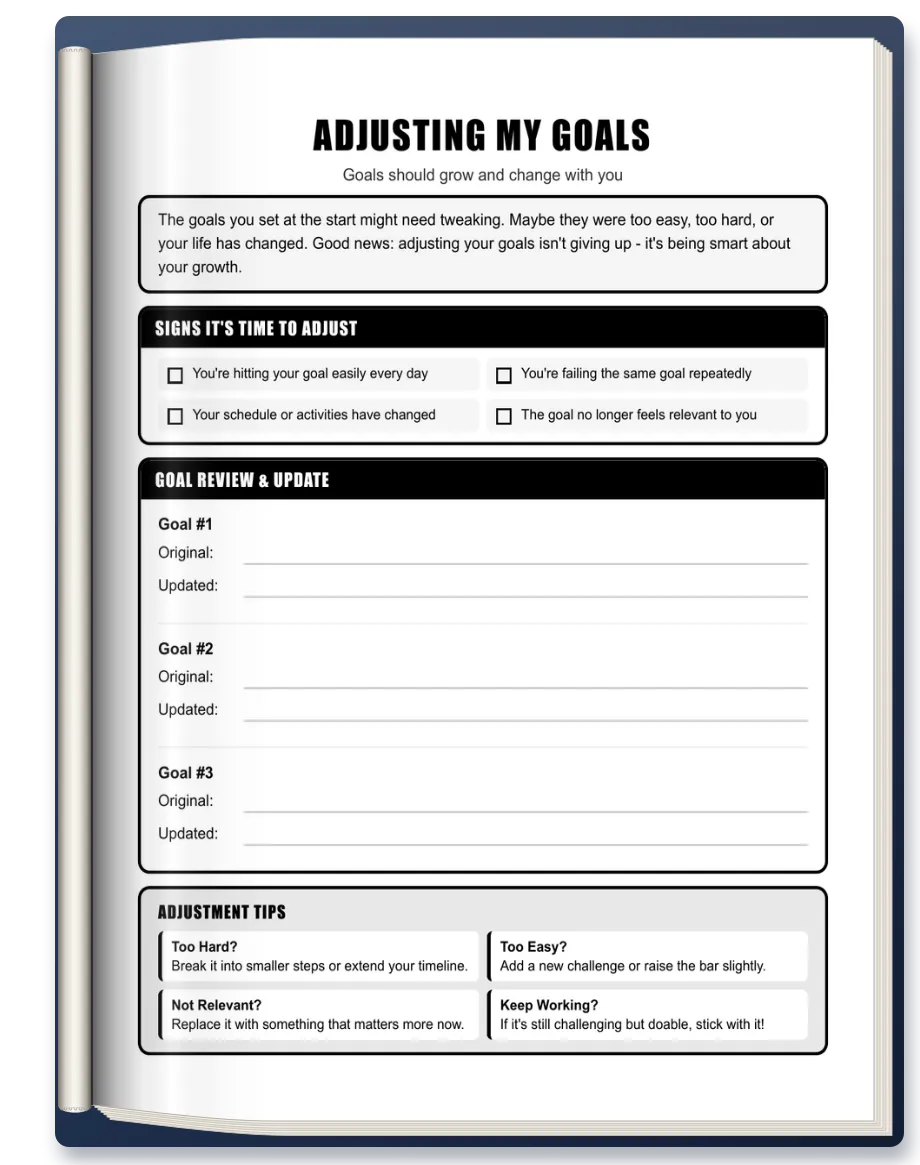
Every kid has a bad week, and the ones who come back are the ones who were told in advance that it was coming. The plan itself also needs updating as they grow: what fits a nine-year-old in October will not fit an eleven-year-old in July, and school terms, holidays and summer all move the line.
In the workbookA plan for a bad week, and a date to look at the rules again.
Where to start
Ages 8 to 10

Ages 11 to 14

Ages 10 to 14
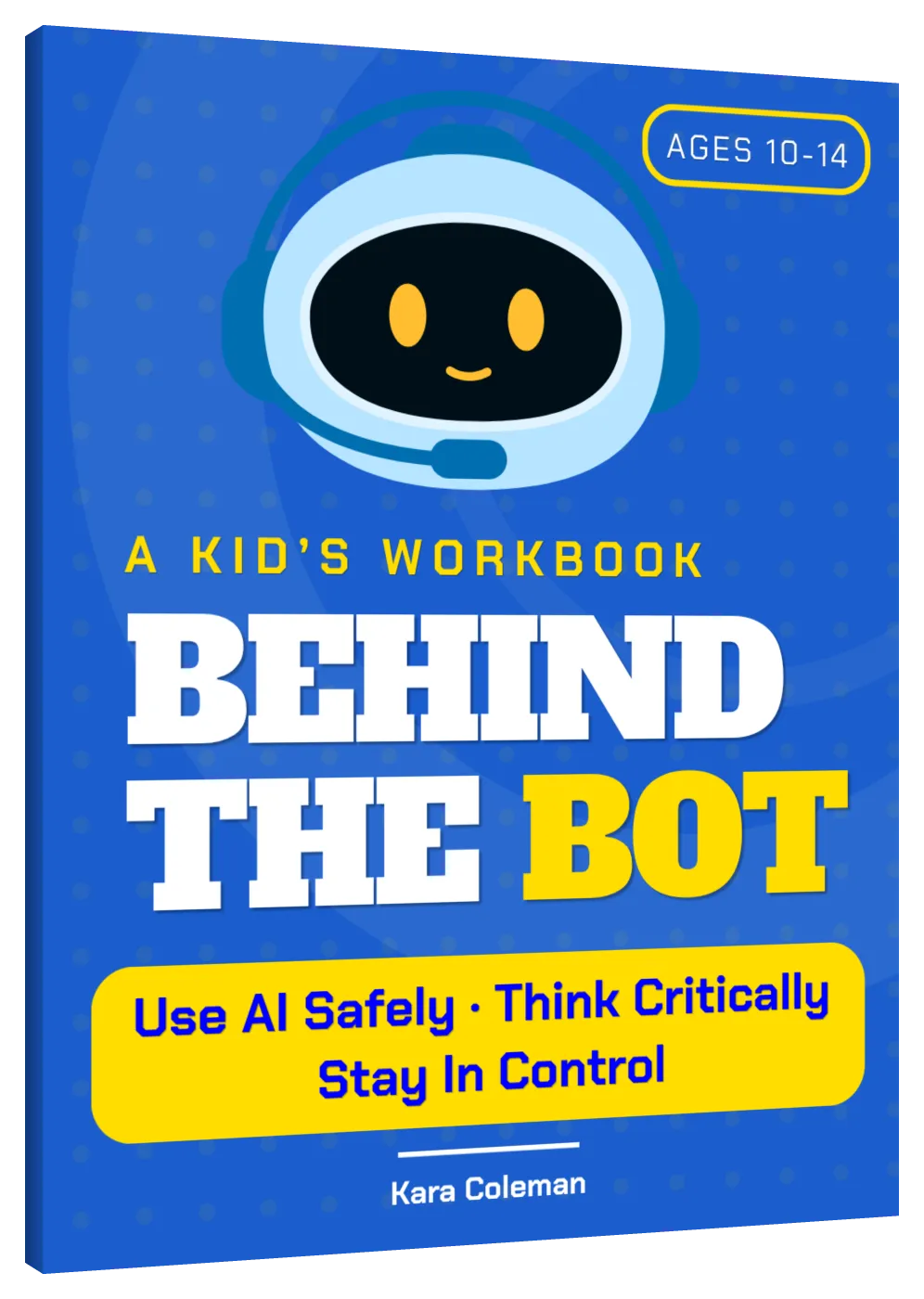
Ages 10 to 14
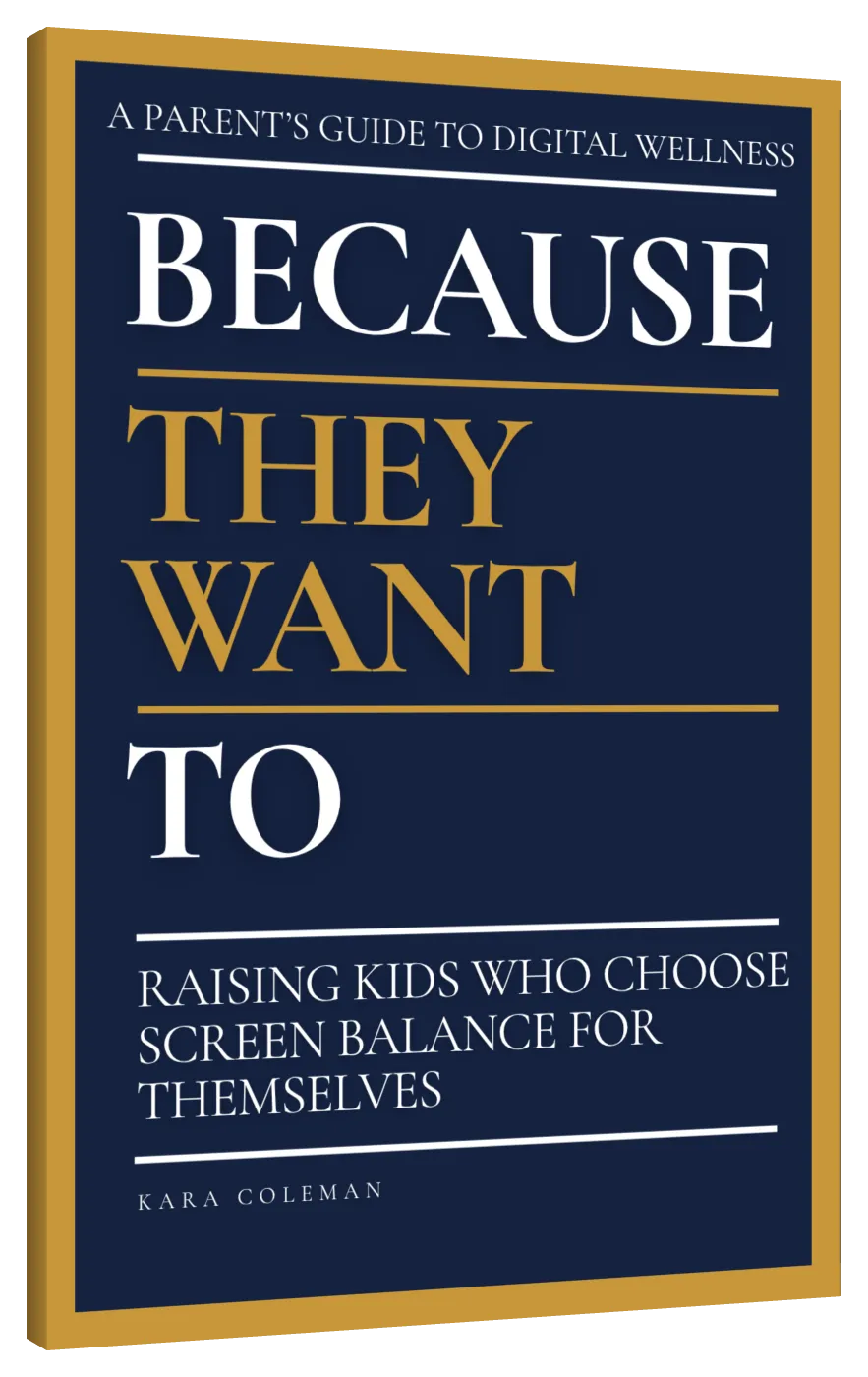
Parent guide